Bitcoin halving explained, the four-year supply cut built into the code
Every four years or so, the number of new bitcoin created with each block is cut in half. The rule is fixed in the protocol and shapes both supply and mining economics.
Key takeaways
- The bitcoin halving cuts the block subsidy paid to miners in half every 210,000 blocks, roughly every four years
- The April 2024 halving reduced the subsidy from 6.25 to 3.125 BTC per block, and the schedule caps total supply just under 21 million
- Halvings squeeze miner revenue per block, which tests their costs and gradually shifts reliance toward transaction fees
The bitcoin halving is a scheduled event, written into Bitcoin's software rules, that cuts in half the number of new bitcoin created with each block. It happens every 210,000 blocks, which works out to roughly every four years. The most recent halving, in April 2024, reduced the reward from 6.25 to 3.125 BTC per block.
The halving matters because it is the core of Bitcoin's monetary policy. Unlike a currency managed by a central bank, which adjusts conditions in response to the economy, Bitcoin's issuance follows a fixed, public timetable. Everyone can see years in advance how many new coins will be created and when the rate will fall.
This explainer covers how the schedule works, why it produces a capped supply, what it means for the miners who secure the network, and why the event is so often surrounded by speculation that the code itself does not support.
How the bitcoin halving works
Bitcoin transactions are grouped into blocks, which are added to the blockchain by miners. Miners compete to find a valid block by performing large amounts of computation, a process known as proof of work. The winner earns a block reward made up of two parts:
- The block subsidy, newly created bitcoin issued by the protocol.
- Transaction fees paid by users whose transactions are included in the block.
The halving affects only the subsidy. Every 210,000 blocks, the subsidy is cut by half. Because the network adjusts mining difficulty every 2,016 blocks to target an average of about 10 minutes per block, 210,000 blocks take roughly four years. The exact date of each halving depends on how quickly blocks are actually found, so it is known by block height rather than by calendar.
The rule is enforced by the software that thousands of independent computers on the network, called nodes, run. Changing it would require broad agreement among users, node operators and miners, which is why the schedule has remained unchanged since Bitcoin launched in January 2009.
The block subsidy schedule
| Block height | Approximate date | Subsidy per block |
|---|---|---|
| 0 | January 2009 | 50 BTC |
| 210,000 | November 2012 | 25 BTC |
| 420,000 | July 2016 | 12.5 BTC |
| 630,000 | May 2020 | 6.25 BTC |
| 840,000 | April 2024 | 3.125 BTC |
| 1,050,000 | Expected around 2028 | 1.5625 BTC |
Future dates are estimates based on the average block time and can shift.
At 3.125 BTC per block and an average of 144 blocks a day, the protocol issues roughly 450 new bitcoin per day, half the pace before the April 2024 halving.
Bitcoin's supply schedule is the most predictable thing about it, and its price is among the least.
Why bitcoin supply is capped
Because each halving cuts the subsidy in half, total issuance forms a geometric series. Added up, the subsidies across all eras converge on a total just under 21 million bitcoin. Most of that supply has already been issued, since the early eras paid the largest rewards.
The subsidy cannot be split forever. Bitcoin's smallest unit, the satoshi, is one hundred-millionth of a bitcoin. Once halvings push the subsidy below one satoshi, it effectively reaches zero, which on the current schedule is expected around the year 2140. After that, miners would be paid only through transaction fees.
The effective supply available to the market is lower than the number of coins issued. Bitcoin sent to addresses whose keys have been lost cannot be recovered, and no one can say precisely how much has been lost. Secure storage practices are covered in crypto wallets, hot vs cold storage.
The fixed cap is often compared with the limited supply of gold. The comparison has limits, since gold has industrial and jewelry demand and a long history as a reserve asset, a topic covered in gold as a portfolio hedge.
What the halving means for miners
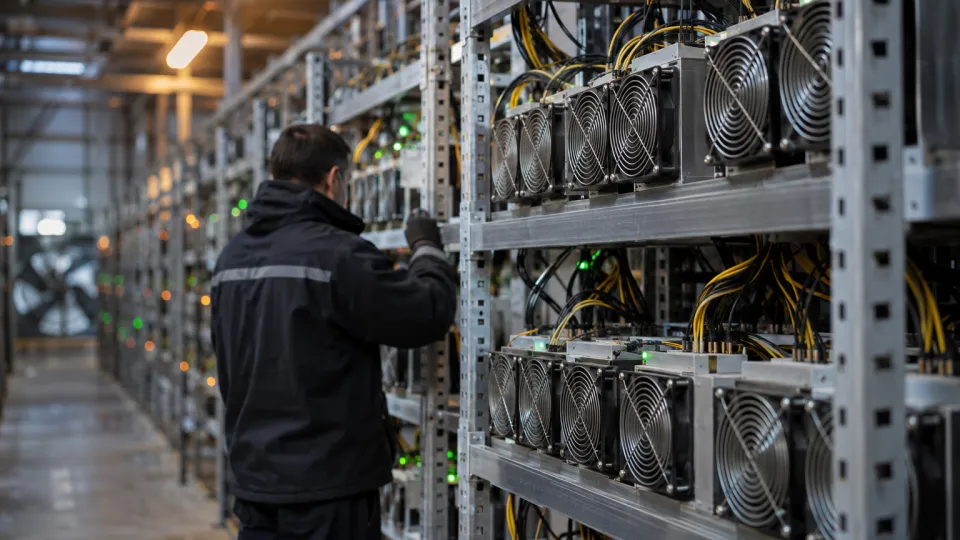
For miners, the halving is an overnight cut in revenue measured in bitcoin. Their main costs, electricity, specialized hardware, cooling and facilities, are mostly paid in ordinary currency. That squeeze plays out in several ways:
- Margins narrow. With the same hardware and power costs, each block earns fewer new coins, so profitability depends heavily on the bitcoin price, fee income and the cost of power.
- Less efficient machines switch off. Older hardware and miners with expensive electricity may become unprofitable and stop operating.
- Difficulty adjusts. If enough computing power leaves the network, blocks slow and the next difficulty adjustment makes mining easier, restoring the 10-minute target and improving economics for those who remain.
- Consolidation and efficiency. Halvings have tended to reward operators with cheap power and newer hardware, and to push others toward mergers, closures or other lines of business.
- Fees grow in relative importance. Each halving makes transaction fees a larger share of the total reward when fee levels hold up.
That last point fuels a long-running debate about Bitcoin's security budget, the total amount paid to miners to secure the network. Some argue that rising fee income and adoption will sustain it as the subsidy shrinks. Others worry that fees alone may not pay for the same level of security. The question remains open and will play out over decades.
The halving and markets
Halvings attract heavy attention, and commentary often links them to past price cycles. There is no reliable basis for that kind of forecast. Only four halvings have occurred, each in very different market conditions, and the schedule is public, so the supply change is known to every participant long before it happens.
Other forces, including interest rates, regulation, investor flows through vehicles such as those described in spot bitcoin ETFs explained, and the broader appetite for risk, can easily outweigh the effect of a smaller subsidy. Live prices are shown on our market data page, but this article does not make price predictions.
Frequently asked questions
When is the next bitcoin halving?
The next halving is set for block 1,050,000. Based on the average block time, it is expected around 2028, though the exact date depends on how quickly blocks are mined.
What happens when all 21 million bitcoin are mined?
The subsidy is expected to reach zero around 2140. Miners would then be compensated only by transaction fees paid by users.
Does the halving affect bitcoin transaction fees?
Not directly. Fees are set by demand for block space. The halving only changes the subsidy, though it makes fees a larger share of miner income.
The bottom line
The bitcoin halving is a predictable, rule-based cut in new supply that occurs every 210,000 blocks. The April 2024 halving brought the subsidy to 3.125 BTC per block, and the schedule caps total issuance just below 21 million coins.
Its clearest effects fall on miners, who must absorb a sudden drop in revenue per block and adapt over time to a system that will increasingly depend on transaction fees. What it means for price is a matter of market forces that no code can fix in advance.
This article is for information and education only and is not investment, legal or tax advice. Rules, rates and market conditions change; check the latest position with a qualified adviser or the relevant authority before acting. Our editorial standards.