How the forex market works, from trading sessions to settlement
The world's largest financial market has no trading floor and no closing bell. Here is how currencies actually change hands, and why that matters for anyone paying abroad.
Key takeaways
- The forex market is an over-the-counter network of dealers and platforms rather than a single exchange.
- Liquidity follows the sun from Sydney to Tokyo, London and New York, and is usually deepest when London and New York overlap.
- Settlement systems such as CLS exist to remove the risk that one side of a currency trade pays and the other does not.
Understanding how the forex market works starts with one fact: there is no central exchange. Currencies trade over the counter, through a global network of banks, electronic platforms and brokers that quote prices to one another and to clients around the clock, five days a week. Trades are settled afterward through payment systems and specialized settlement services.
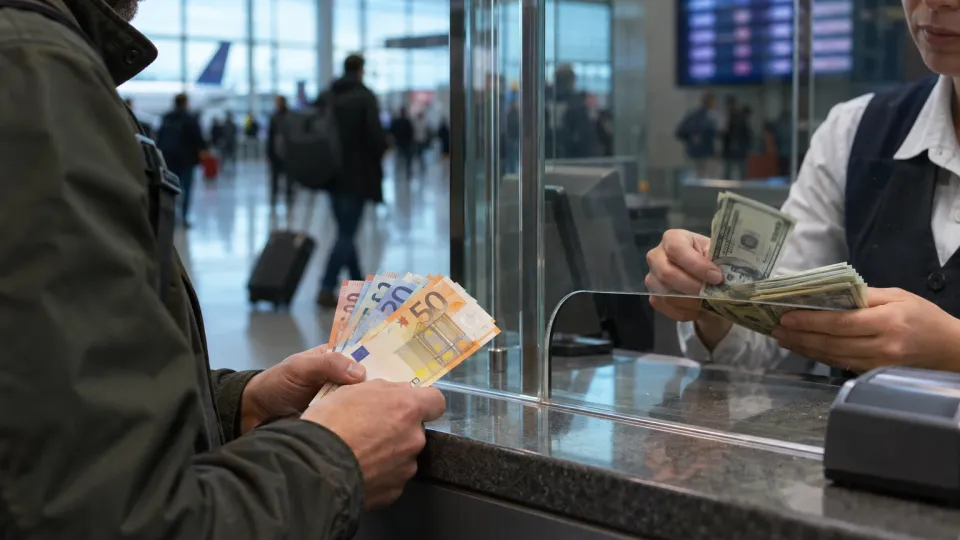
That structure affects anyone who touches a foreign currency. A company paying a supplier in yen, a fund buying European shares and a traveler swapping cash at an airport kiosk are all, at different distances, plugged into the same market. The rate each of them gets depends on where they sit in the network, what time of day they deal and how much they trade.
The scale is hard to grasp. The Bank for International Settlements, which surveys foreign exchange turnover every three years, put average daily turnover at more than $7 trillion in its 2022 survey, far larger than global equity trading.
How the forex market works without a central exchange
Unlike stocks, which typically trade on exchanges with a central order book, currencies have always traded directly between dealers, first by telephone and now mostly on screens.
Today the market is layered:
- The interdealer tier. Large banks and some nonbank market makers trade with each other through electronic platforms and brokers. This is where the tightest prices are found.
- The dealer-to-client tier. Asset managers, corporates and smaller banks trade with dealers, either by requesting quotes from several banks on multi-dealer platforms or through a single bank's own platform.
- The retail and small-business tier. Payment providers, retail brokers and bank branch networks aggregate many small trades and pass them up the chain, adding a markup at each step.
Because there is no single venue, there is no single official price at any moment. Prices across venues are kept close together by arbitrage. Benchmark rates, such as the widely used 4 p.m. London fixing, are calculated from trades and quotes in a defined window and are used to value portfolios and settle contracts.
The range of instruments is also broader than many expect. Spot trades get the headlines, but FX swaps, which pair an exchange of currencies today with a reverse exchange at a later date, account for the largest share of turnover. Outright forwards, longer-dated currency swaps and options make up the rest.
The four trading sessions
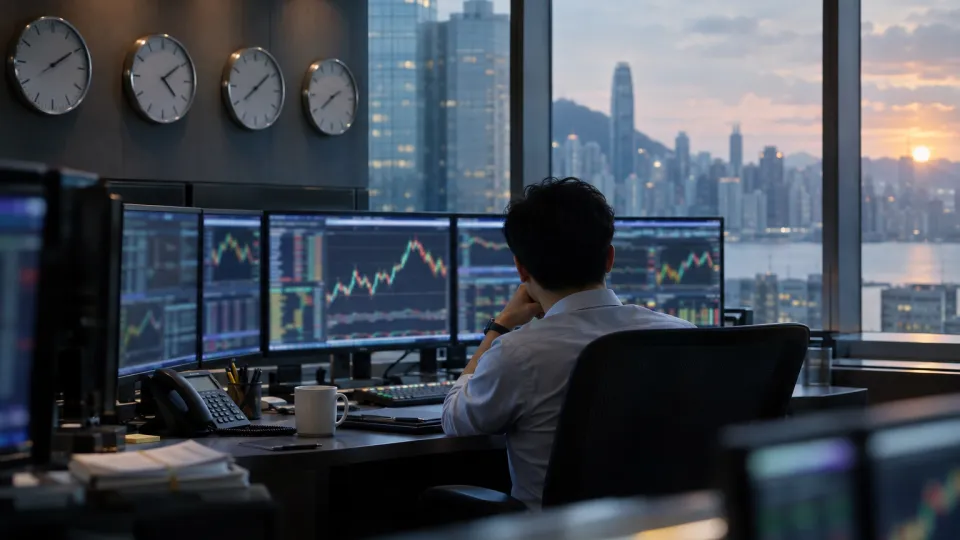
The market follows the business day around the globe. As one financial center winds down, another opens, so trading runs from Monday morning in Asia-Pacific to Friday afternoon in New York.
| Session | Main centers | What typically characterizes it |
|---|---|---|
| Sydney | Sydney, Wellington | Opens the trading week; thinner liquidity, active in Australian and New Zealand dollars |
| Tokyo | Tokyo, Singapore, Hong Kong | Heavy activity in the yen and other Asian currencies |
| London | London and other European centers | The largest single trading center; deep liquidity across most pairs |
| New York | New York, Toronto | Active in dollar pairs; the overlap with London is usually the busiest period |
Session boundaries are approximate and shift with daylight saving changes. What matters in practice is overlap. When London and New York are both open, the largest number of dealers are quoting, spreads tend to be tightest and large orders move prices least. Late in the New York afternoon and around the weekly open, fewer dealers are active and prices can jump on relatively small flows.
In foreign exchange, the time of day is part of the price.
Who trades and why
Participants come to the market with very different motives.
- Dealer banks make markets, earning the spread between buying and selling prices while managing the inventory risk that comes with it.
- Nonbank liquidity providers, often electronic trading firms, have become significant price makers in the most liquid pairs.
- Asset managers and pension funds buy currencies to invest abroad and often hedge that exposure back into their home currency.
- Hedge funds and other speculative investors take views on interest rate differentials, growth and policy.
- Corporates convert export revenues, pay foreign suppliers and hedge future cash flows, as explored in our guide to FX risk hedging for SMEs.
- Central banks manage reserves and occasionally intervene to influence their own currency.
- Retail traders and travelers account for small individual amounts but a very large number of transactions.
The forces that move rates, from interest rate gaps to risk appetite, are covered in our explainers on what moves the US dollar and what drives emerging market currencies.
Liquidity, and why it is uneven
Liquidity is the ability to trade a meaningful amount without moving the price much. In foreign exchange it varies enormously by currency pair, by time of day and by market conditions.
Major pairs involving the US dollar, the euro and the yen are among the most liquid instruments in finance. Currencies of smaller economies, or those subject to capital controls, can trade with far wider spreads and much less depth. Our guide to currency pairs and bid-ask spreads explains how that shows up in the price a customer actually pays.
Liquidity can also evaporate. Around major data releases, central bank surprises or holiday periods, dealers widen their quotes or step back, and sudden sharp moves have occurred when thin liquidity met large orders.
Settlement and the role of CLS
A currency trade is an exchange of two payments. If a bank pays out euros but the dollars it is owed never arrive, it can lose the full amount. This is known as settlement risk, or Herstatt risk, after the German bank whose closure in 1974 left counterparties that had already paid Deutsche marks without the dollars due to them.
To reduce that risk, major banks created CLS, which began operating in 2002. CLS settles trades in a set of major currencies on a payment-versus-payment basis, meaning both legs of a trade settle together or neither does. It also nets members' obligations, so the payments that actually flow through central bank systems are a fraction of the gross value traded. Trades in currencies outside CLS, or between counterparties that do not use it, still settle bilaterally, often through correspondent banks, and carry more settlement risk.
For spot trades, the standard settlement date is two business days after the trade for most pairs, with exceptions such as the US dollar against the Canadian dollar, which settles one business day after.
Frequently asked questions
Is the forex market open 24 hours a day?
It trades continuously from the Monday open in Asia-Pacific to the Friday close in New York, but liquidity varies across that period and is usually thinnest around the weekly open and close.
Who sets exchange rates?
For freely floating currencies, no single body does. Rates emerge from trading between dealers and their clients. Some central banks peg or manage their currencies and intervene to keep them within a range.
Why does my bank's rate differ from the rate on the news?
News sites usually show an indicative interbank mid-rate. Banks and payment providers add a margin and may quote for a later settlement date. A currency converter helps compare a quote with the mid-market reference.
The bottom line
The forex market is a vast, decentralized web of dealers, platforms and clients rather than a single exchange. Liquidity moves with the sun, peaks when London and New York overlap and thins at the edges of the week.
For businesses, the practical lessons are to know where a quote comes from, to deal when markets are deep where possible, and to understand how and when a trade will actually settle.
This article is for information and education only and is not investment, legal or tax advice. Rules, rates and market conditions change; check the latest position with a qualified adviser or the relevant authority before acting. Our editorial standards.