What is Skrill and how does the Paysafe digital wallet work
Skrill is an e-money wallet for online payments and transfers, owned by Paysafe. How it works, who regulates it and where its limits lie.
Key takeaways
- Skrill is a digital wallet that stores electronic money and is used to pay online, send money to other people and move funds to bank accounts and cards.
- It belongs to Paysafe, and in the European Economic Area it is provided by an electronic money institution regulated by the Central Bank of Ireland.
- A Skrill balance is e-money rather than a bank deposit, so it earns no interest and is protected by safeguarding rules, not deposit insurance.
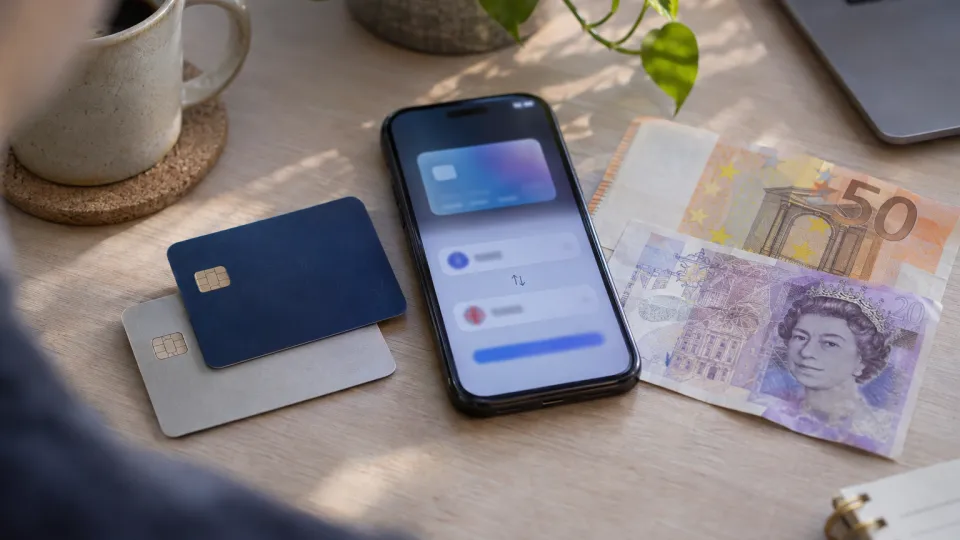
Skrill is a digital wallet, an online account that holds electronic money and lets its users pay merchants on the web, send money to other people and move funds out to bank accounts and cards. It is owned by Paysafe, the payments group whose shares trade on the New York Stock Exchange, and in Europe it is operated by an electronic money institution regulated by the Central Bank of Ireland. Users open an account with an email address, add money from a bank account or card and then pay or transfer from the balance.
For many people, Skrill is the box at an online checkout that lets them pay without typing card details into an unfamiliar site. For others it is a way to receive money from abroad, hold more than one currency or move funds between platforms. The service looks like a bank account on screen, but the legal relationship behind it is different, and that difference affects interest, protection and fees.
This explainer sets out where Skrill came from, how an account works in practice, who regulates it in different regions and what its main strengths and weaknesses are. Details were checked against Skrill's and Paysafe's own pages in November 2026. Product features, fees and country coverage change, so readers should confirm the current position on Skrill's official site before relying on any specific point.
What is Skrill and where did it come from
Skrill's own site says it has served customers since 2001. The business originally traded as Moneybookers, a UK online payments company, and Paysafe's corporate releases still describe Skrill as having operated under that name in its early years. The Moneybookers name was later replaced by the Skrill brand.
In 2015, Optimal Payments Plc, the company now known as Paysafe, bought the Skrill Group. Paysafe's announcement put the enterprise value at approximately €1.1 billion and dated completion to August 10, 2015. The group it acquired also included paysafecard, the prepaid online voucher brand. Today Skrill sits inside Paysafe's digital wallets business alongside Neteller, a second wallet brand explained in what is Neteller. The parent company and its brands are covered in more detail in the profile of Paysafe Group.
How a Skrill account works
A Skrill account is an electronic money account. When a user adds funds, Skrill issues e-money of equal value, and the holder can spend it, send it or redeem it back to a bank account or card. Skrill's terms of use state that funds in the account do not earn interest and that an e-money account is not a bank account. The concept is explained in the guide to electronic money institutions.
The main functions work as follows:
| Function | What it does | Points to check |
|---|---|---|
| Add money (upload) | Funds the balance by bank transfer, card or other local methods | Card and voucher uploads can carry a fee; cash uploads are prohibited by the terms |
| Pay online | Pays merchants that accept Skrill at checkout | Merchant disputes are handled differently from card chargebacks |
| Skrill to Skrill | Sends money to another user by email address | A send fee and, where currencies differ, a conversion fee can apply |
| Skrill Money Transfer | Sends money abroad to a bank account, card or mobile wallet | Funded by card or bank payment, not from the wallet balance |
| Withdraw | Moves the balance to a bank account or card | Withdrawal fees, minimum fees and limits apply |
| Prepaid Mastercard | Spends the balance in shops and online, physical or virtual | Card issuance, annual and FX fees are listed separately |
| Crypto | Buys, sells and withdraws cryptoassets inside the wallet | Not available in every country, and prices can swing sharply |
Account limits depend on the level of verification. Skrill's terms say upload, payment and withdrawal limits vary with the identity documents provided, the user's country and other factors, and the company may ask for identity and address documents before allowing a withdrawal. These checks follow the same anti-money-laundering logic that applies to banks.
Skrill is accepted by a wide range of online merchants, including trading and gaming sites, and many users first encounter it at such checkouts. The wallet also offers account levels and a VIP programme with different pricing for some services; the conditions are set out on Skrill's site.
Business use
Skrill's terms distinguish personal from commercial use. A personal account may not be used to receive payments in connection with a business without informing Skrill, and commercial users must accept merchant terms and pay additional fees. Businesses that want to take Skrill at checkout use Paysafe's merchant services, covered in the guide to accepting Skrill, Neteller and paysafecard.
Who regulates Skrill
Skrill is a brand, and the licensed company behind it depends on where the customer lives. Based on Skrill's terms of use and Paysafe's regulatory disclosures as of November 2026:
| Customer region | Provider named in official documents | Regulator and status |
|---|---|---|
| European Economic Area | Paysafe Payment Solutions Limited, trading as Skrill | Central Bank of Ireland; electronic money institution, registration number C184986, and a crypto-asset service provider under MiCA |
| United Kingdom | Skrill Limited | Financial Conduct Authority; authorised under the Electronic Money Regulations 2011, firm reference number 900001 |
| United States | Skrill USA, Inc. | Registered with FinCEN and licensed as a money transmitter in various states |
Skrill's terms page carries a notice that Paysafe plans to move its UK Skrill business from Skrill Limited to Paysafe Financial Services Limited, another FCA-authorised group company, on February 1, 2027, and says the change will not affect how customers use their accounts. Readers can confirm any entity on the Financial Conduct Authority register or the Central Bank of Ireland's register.
Skrill is one brand but several licensed companies, and the one that holds a customer's money depends on where that customer lives.
Pros and cons of Skrill
Skrill suits some uses well and others poorly. A neutral reading of its own documents points to the following trade-offs.
Strengths:
- Privacy at checkout. Merchants receive a wallet payment rather than the user's card or bank details.
- Speed between users. Skrill describes Skrill-to-Skrill transfers by email as instant.
- Multi-currency features. The wallet handles several currencies and offers a prepaid card linked to the balance.
- Regulated status. The operating companies are authorised e-money issuers subject to safeguarding rules.
Weaknesses:
- Fee layers. Currency conversion, withdrawals, card uploads and inactivity can each carry charges, detailed in the guide to Skrill fees.
- No deposit insurance. The terms state that deposit guarantee schemes do not apply to Skrill accounts.
- Limited dispute rights. The terms restrict chargebacks on card uploads to unauthorized use or a breach by Skrill, so a disagreement with a merchant is not grounds for one.
- Account reviews. Like any regulated payments firm, Skrill can restrict an account while it checks documents or transactions.
Safety and scam questions are covered in depth in is Skrill safe, and comparisons with rivals appear in Skrill vs Neteller and Skrill vs PayPal.
Frequently asked questions
Is Skrill a bank?
No. Skrill is provided by electronic money institutions, not banks. Its terms state that e-money accounts are not bank accounts, that balances earn no interest and that deposit guarantee schemes do not apply. Customer funds are instead protected by safeguarding rules.
Can Skrill be used to send money abroad?
Yes, in two main ways: Skrill-to-Skrill transfers by email, and Skrill Money Transfer, which sends funds to a bank account, card or mobile wallet in another country. Costs and coverage differ, as explained in the guide on how to send money abroad with Skrill. The currency converter helps put a quoted rate in context.
Does Skrill work in the United States?
Yes, through Skrill USA, Inc., a separate company that is registered with FinCEN and licensed as a money transmitter in various states. Its fee schedule and some features differ from those offered to European customers, so US users should read the US version of Skrill's site.
The bottom line
Skrill is a long-established digital wallet that grew out of Moneybookers and now belongs to Paysafe. It lets users pay online without sharing card details, send money by email and move funds abroad, all from an e-money balance held with a regulated electronic money institution.
The trade-offs lie in the details: layered fees, no deposit insurance and narrower dispute rights than a credit card. Users who check which entity serves their country, read the current fee page and keep balances to what they need will understand what they are signing up for.
This article is for information and education only and is not investment, legal or tax advice. Rules, rates and market conditions change; check the latest position with a qualified adviser or the relevant authority before acting. Our editorial standards.