What is paysafecard and how does it work? Prepaid PINs, fees and limits explained
A paysafecard PIN lets shoppers pay online without sharing bank or card details. Service fees on unused balances, low payment caps and cash-like risk are the trade-offs.
Key takeaways
- Paysafecard is a prepaid payment method in which a 16-digit PIN, bought at a shop or online, is entered at checkout instead of bank or card details.
- Fees and limits are set country by country, and in some markets a monthly service fee starts on unused PIN balances within weeks of purchase.
- A PIN works like cash, so anyone who learns it can spend it, and the method offers privacy from merchants rather than full anonymity.
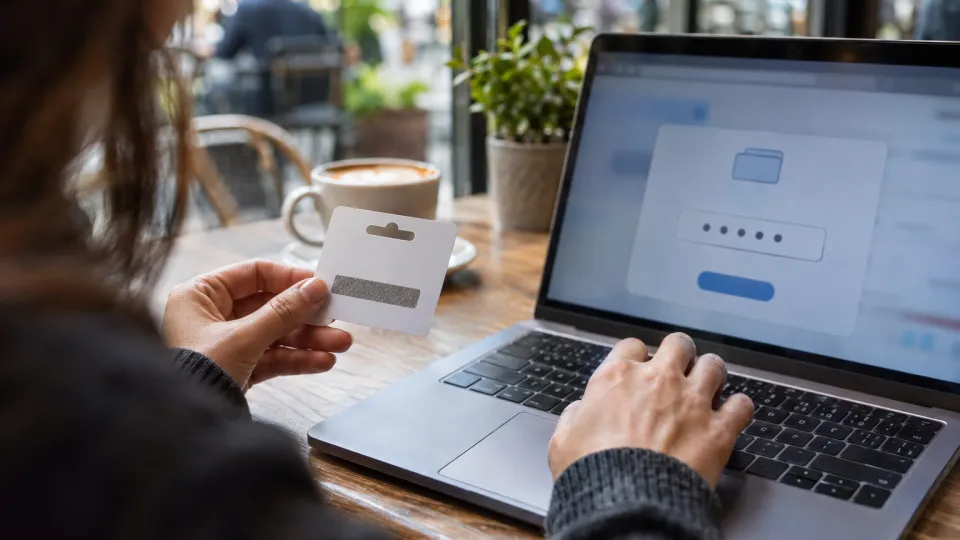
What is paysafecard? It is a prepaid online payment method in which the shopper buys a voucher with a 16-digit PIN, for cash or by card, and types that PIN into the merchant's payment window instead of entering bank or card details. The PIN carries a fixed value that is drawn down with each purchase. The brand belongs to Paysafe, the payments group that also runs the Skrill and Neteller digital wallets.
The appeal is straightforward: a way to pay online that does not expose a bank account and that caps spending at the amount loaded. The trade-offs are less visible. Unused balances can attract monthly service fees, per-payment limits are low in some countries, and a PIN behaves like cash, so anyone who learns the number can spend it.
This explainer covers how the vouchers work, where they are sold, what the paysafecard account adds, the main fee types and what privacy the method really offers. Details were checked against the providers' own pages in November 2026. Fees and limits differ by country and change over time, so readers should always check the fees and limits page for their own country on paysafecard.com.
What is paysafecard and how it works, step by step
The basic voucher, which the company now styles as PaysafeCard, needs no bank account and no registration.
- Buy a PIN. At a sales outlet the buyer picks an amount, pays and receives a receipt printed with the 16-digit PIN. PINs can also be bought online through the PIN Shop in a paysafecard account.
- Choose paysafecard at checkout. Merchants that accept the method list it among their payment options.
- Enter the PIN. The shopper is taken to a paysafecard payment window and types in the PIN. If one PIN does not cover the price, paysafecard's help pages in several countries allow up to ten PINs to be combined in one payment, within a country-specific maximum.
- Spend the rest later. The purchase amount is deducted and any remaining credit stays on the PIN, where it can be checked with the balance tool on the official site.
Who legally issues the product depends on where it is bought. In the European Economic Area, the footer of paysafecard's pages names Paysafe Prepaid Services Limited, an Irish electronic money institution regulated by the Central Bank of Ireland. Its terms give the registration number C185005. In the UK, the issuer named is Prepaid Services Company Limited, authorized by the Financial Conduct Authority under firm reference number 900021. On the US site, the product is described as a closed loop gift card issued by The Bancorp Bank N.A. Because e-money rules apply in Europe, the guide to electronic money institutions explains how such balances are protected.
Where paysafecard is sold
Physical vouchers are sold through retail partners. Paysafecard's own pages describe sales outlets that include large supermarket chains, post offices and kiosks, with a store finder on each country site. Paysafe's merchant page for the brand cites about 650,000 sales outlets in more than 50 countries at the time of writing (November 2026), although those headline figures are not always current.
Two points are worth knowing before buying:
- Retailers can add their own charges. On the US fees page, authorized distributors charge a fee on top of the face value, listed at the time of writing (November 2026) as $1.49 on a $10 PIN and $3.49 on a $50 or $100 PIN.
- Online purchase requires an account. Buying through the PIN Shop means logging in, which links the purchase to a registered user.
The paysafecard account and PaysafeWallet
The free paysafecard account, long marketed as "my paysafecard," collects PINs into a single balance. Instead of typing a PIN, the holder logs in to pay, and the account adds features such as online PIN purchases and, in some countries, payouts. Higher limits require identity verification, typically a photo ID document and in some cases proof of address.
Account holders in some markets can also add PaysafeWallet, an optional upgrade. Under terms dated April 2026, it is an e-money account with a euro IBAN for SEPA transfers and a Mastercard debit card, virtual on the Start plan and physical on the Plus plan. Holders must be at least 18 and pass an identity check, and the wallet may not be used for business payments. The terms state that it is not a bank account, earns no interest and is not covered by the Irish Deposit Guarantee Scheme.
According to the Fee Information Document effective April 24, 2026, the Start plan costs €1 a month (€12 a year) and the Plus plan €3 a month (€36 a year), and loading the wallet with a paysafecard PIN costs 5%. Those figures were correct at the time of writing (November 2026) and may change.
Paysafecard fees and limits by type
Using a PIN to pay is generally free, but several charges can apply around it. The examples below are taken from paysafecard's fees and limits pages for Germany, the UK and the US at the time of writing (November 2026). Other countries differ.
| Fee or limit | What triggers it | Examples at the time of writing |
|---|---|---|
| Service fee on a PIN | Leaving credit on an unused PIN | Germany, €4 a month, first charged 30 days after purchase. UK, £4 a month from the second month. US, $2 a month after 24 months of inactivity, subject to applicable law |
| Refund fee | Asking for unused PIN credit to be paid out | Germany, 5% with a maximum of €5. UK, £6 per refund |
| Account service fee | No transactions in the account for 12 months | Germany, €2 a month from the 13th month. UK, £5 a month from the 13th month |
| Conversion fee | Paying in a currency other than the PIN's currency | Varies, shown in the site's currency calculator |
| Maximum per payment | Paying with PINs rather than an account | Germany, €50. UK, £40. US, $300 for combined PINs |
The service fee matters most for occasional users. In a hypothetical case based on the German terms quoted above, a €50 PIN left untouched would lose roughly €12 within its first three months. Paysafecard's own pages suggest redeeming PINs into an account to avoid the PIN service fee, but the account then has its own inactivity fee after a year without transactions.
A paysafecard PIN behaves like cash in an envelope: whoever reads the number can spend the money.
Shoppers paying merchants in another currency can estimate the amount with the site's currency converter, but the rate and fee actually applied are those shown by paysafecard.
Privacy and security, what paysafecard does and does not hide
Paysafecard's main privacy benefit is that the merchant never receives bank or card details. That limits the damage if a merchant's systems are breached and suits people who do not want to share card numbers with many websites.
It is not the same as anonymity. The issuers are regulated payment firms subject to anti-money-laundering rules, which is one reason unregistered PINs carry low per-payment caps in some European countries and why account limits rise only after identity checks. Paysafecard's help pages also state that it provides information to the police when they request it.
Security rests on the PIN. Paysafecard says it will never ask customers for their PIN by email or phone, that its service team asks only for the serial number, and that authorities, legal chambers and debt collectors do not use paysafecard as a means of payment. Its terms require PINs to be used only in authorized online shops. Any request to read out a PIN to a caller, a seller or an "official" is a warning sign, as explained in the guide to paysafecard scams.
Frequently asked questions
Who owns paysafecard?
Paysafecard is part of Paysafe, whose parent company, Paysafe Limited, is listed on the New York Stock Exchange. The same group runs the Skrill and Neteller wallets, described in the profile of Paysafe Group and the explainer on what Skrill is.
Can I get money back from an unused paysafecard PIN?
Paysafecard offers a refund process for remaining credit, but in many countries a refund fee is deducted, such as a 5% fee capped at €5 in Germany at the time of writing. The conditions and documents required are set out on the local help and fees pages.
Is paysafecard anonymous?
Not fully. The merchant does not see bank or card details, but the issuer is regulated, low payment caps apply to unregistered PINs in some countries, and accounts with higher limits require identity verification.
The bottom line
Paysafecard turns cash or a card payment into a prepaid PIN that can be spent online without sharing bank details. That makes it useful for budgeting and for people who prefer not to give card numbers to every website.
The costs sit in the details. Service fees on idle PINs, refund fees and low per-payment caps vary by country, so the local fees and limits page should be read before buying, and a PIN should be guarded as carefully as cash.
This article is for information and education only and is not investment, legal or tax advice. Rules, rates and market conditions change; check the latest position with a qualified adviser or the relevant authority before acting. Our editorial standards.