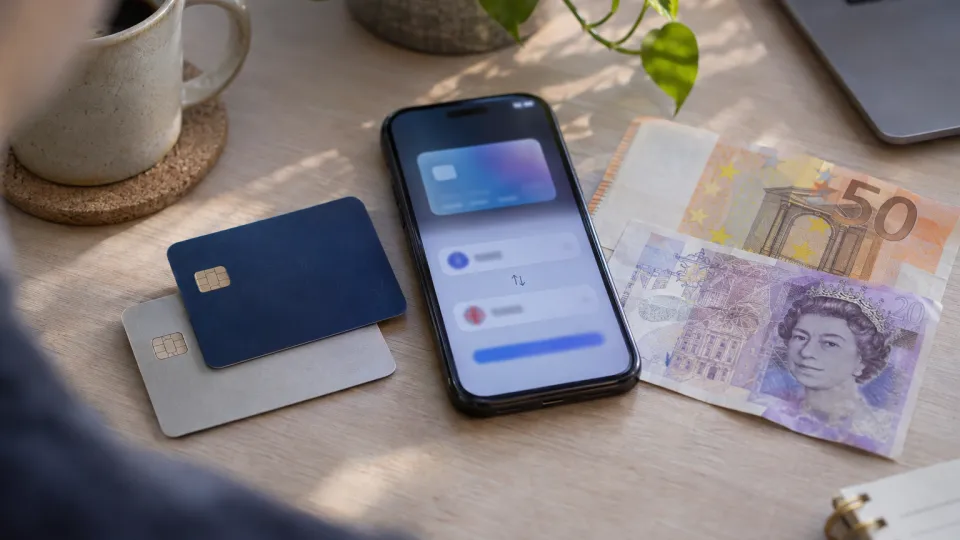
Real-time payments around the world, from Faster Payments and UPI to Pix and FedNow
Instant account-to-account payments have spread from a few pioneers to most major economies. The systems differ in design, and the next frontier is linking them across borders.
Key takeaways
- Real-time payment systems settle account-to-account transfers in seconds, at any hour, and are now operating in most major economies.
- Their success has depended as much on design choices, such as easy aliases and low costs, as on the underlying technology.
- Linking domestic systems across borders is the next step, but such projects are complex and timelines remain uncertain.
For most of the history of electronic banking, moving money between accounts took time. A transfer sent on a Friday evening might not arrive until Monday or later, and businesses built their cash management around batch cycles, cut-off times and settlement delays.
Real-time payment systems changed that expectation. They allow funds to move from one bank account to another within seconds, at any time of day, including weekends and holidays, with the recipient able to use the money immediately. What began as a handful of national initiatives has become standard infrastructure across much of the world.
For businesses, instant payments affect everything from how customers pay to how suppliers are settled and how treasurers forecast cash. Understanding the main systems, and how they differ, helps companies decide where instant payments can replace slower or more expensive methods.
What makes a payment real-time
Real-time payment systems share a few core features. Payments are processed individually rather than in batches, the payer's bank receives confirmation almost immediately, and the payee's account is credited within seconds. Most systems run around the clock and are designed for credit transfers, meaning the payer pushes money rather than the payee pulling it.
Behind those common features, the systems differ in important ways: who operates them, whether they offer aliases such as phone numbers instead of account details, what transaction limits apply, how fraud is managed, and how much participants charge.
The major systems
UK Faster Payments
The United Kingdom's Faster Payments service, launched in 2008, was one of the first modern national real-time payment systems among major economies. It handles a large share of everyday transfers between UK accounts and became the base for later innovations such as pay-by-bank services, covered in our guide to open banking and pay-by-bank.
India's UPI
The Unified Payments Interface, built by the National Payments Corporation of India and launched in 2016, connects bank accounts through mobile apps and virtual payment addresses. Its interoperable design, which lets apps from different providers work across all participating banks, and its low cost to users helped make it one of the most widely used payment systems in the world, especially for small, everyday transactions and QR-code payments at merchants.
Brazil's Pix
Pix, created and operated by the Central Bank of Brazil, launched in November 2020. Users can send money using keys such as a phone number, email address or tax identification number, or by scanning a QR code. The central bank's direct role, mandatory participation for larger institutions and free transfers for individuals contributed to very rapid adoption across consumers and businesses.
United States, RTP and FedNow
The US has two instant payment networks. The RTP network, operated by The Clearing House, a company owned by large banks, launched in 2017. The Federal Reserve launched its own service, FedNow, in July 2023, aiming to make instant payments available to banks and credit unions of all sizes. Adoption in the US has been gradual because participation is voluntary and banks decide when and how to offer the services. Details are available on the Federal Reserve website.
SEPA Instant
In Europe, the SEPA Instant Credit Transfer scheme launched in November 2017, allowing euro transfers within seconds across participating countries. Uptake varied by country for several years. The EU's Instant Payments Regulation, adopted in 2024, required payment service providers in the euro area to offer instant euro transfers at a price no higher than standard transfers, with deadlines for receiving and sending in 2025, along with a verification-of-payee check. Our explainer on EU instant payments and verification of payee covers those obligations.
| System | Region | Launched | Operator |
|---|---|---|---|
| Faster Payments | United Kingdom | 2008 | Pay.UK |
| UPI | India | 2016 | National Payments Corporation of India |
| RTP | United States | 2017 | The Clearing House |
| SEPA Instant | Euro payments area | 2017 | Scheme run by the European Payments Council |
| Pix | Brazil | 2020 | Central Bank of Brazil |
| FedNow | United States | 2023 | Federal Reserve |
Instant payments succeed when they are cheap, simple and everywhere, and the technology is the easiest of those three to deliver.
Linking systems across borders
Domestic instant payments have advanced faster than cross-border ones. International transfers still often pass through chains of correspondent banks, with delays and fees that the G20 has set out to reduce, as described in our analysis of the G20 roadmap for cross-border payments.
One approach is to connect national instant payment systems directly. Several bilateral links already exist, particularly in Asia, where countries have connected their systems so that users can send money between them using local apps and aliases.
The BIS Innovation Hub's Project Nexus explored a multilateral alternative: a common set of rules and technical standards that would let a domestic system connect once to a shared network rather than building separate links with each country. The work drew interest from several central banks in Asia, and the BIS later indicated that participating central banks would take the project forward themselves. Projects of this kind face hard questions on foreign-exchange conversion, sanctions screening, fraud liability and governance, so timelines should be treated with caution. Updates are published on the BIS website.
What it means for businesses
Instant payments create opportunities and responsibilities. A practical checklist:
- Review incoming payment options. Accepting instant bank transfers can speed up cash collection and may cost less than card acceptance in some markets.
- Rethink supplier and payroll runs. Instant settlement allows payments to be timed closer to due dates, which can improve working capital.
- Update cash forecasting. Funds can arrive and leave at any hour, so treasury tools and reconciliation processes need to work around the clock.
- Strengthen fraud controls. Because instant payments are usually irrevocable, scams that trick staff into paying fraudsters are a major risk. Payee verification and approval workflows matter.
- Check limits and coverage. Transaction limits, participating banks and availability for business accounts differ by system and by provider.
Frequently asked questions
Can instant payments be reversed?
Generally no. Most systems treat payments as final once completed, so recovery after fraud or error depends on the receiving bank's cooperation and local rules.
Are real-time payments free?
It depends on the system and the bank. Some systems are free for individuals, while businesses may pay fees set by their providers.
Can a business send instant payments abroad?
Only where systems have been linked or a provider offers a service that connects them. Most cross-border transfers still use traditional channels.
The bottom line
Real-time payments have moved from novelty to core infrastructure in the UK, India, Brazil, Europe and the United States, each with its own design and pace of adoption.
For businesses, the gains in speed and cash visibility are real, but so are the demands on fraud controls and round-the-clock operations. Cross-border linking is the next frontier, and its progress is worth watching rather than assuming.
This article is for information and education only and is not investment, legal or tax advice. Rules, rates and market conditions change; check the latest position with a qualified adviser or the relevant authority before acting. Our editorial standards.